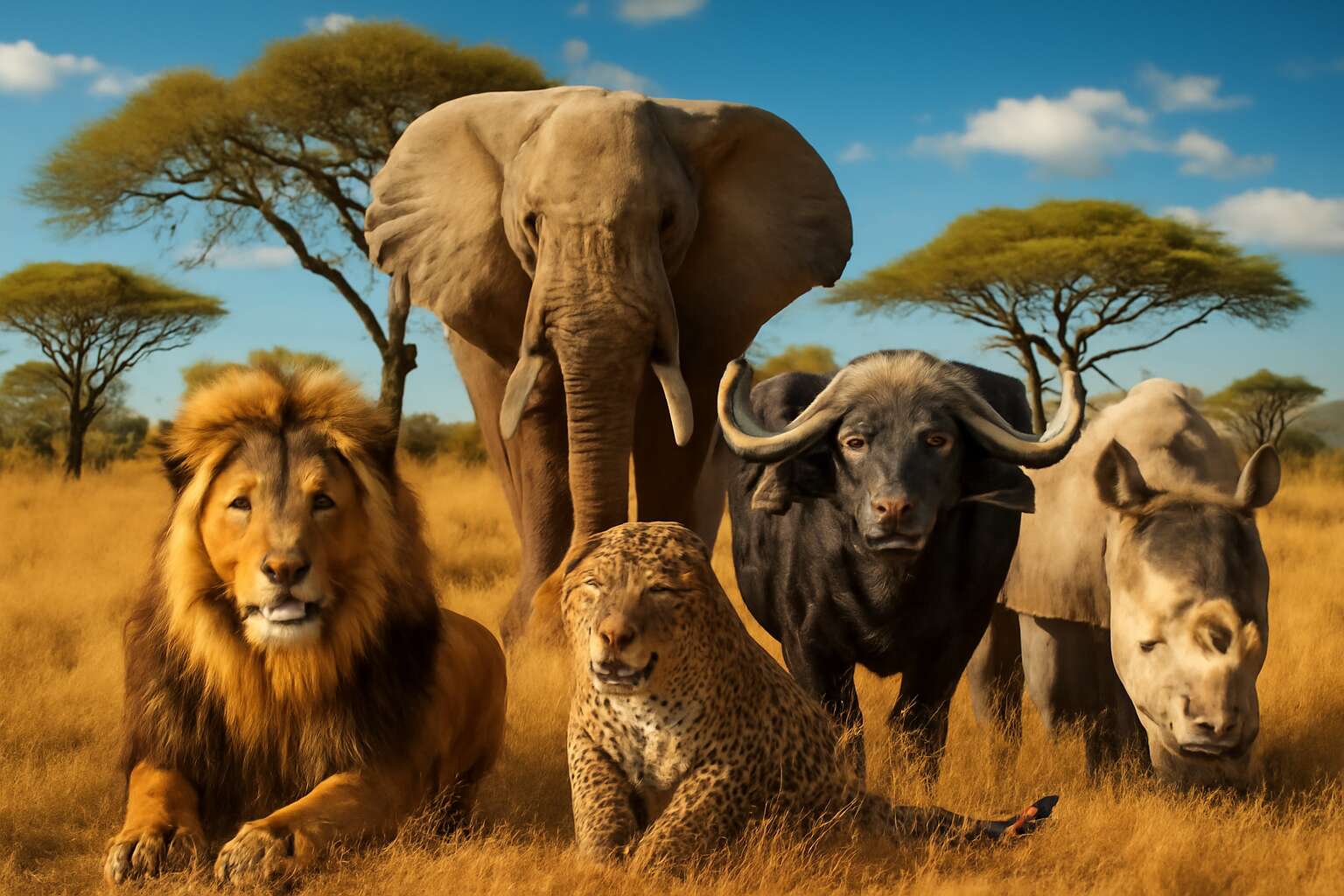
Understanding the Big Five Animals of Africa
Definition of the Big Five – What constitutes the Big Five and their significance to safaris and wildlife conservation
Imagine a safari adventure that’s so quintessentially African, it practically kicks off with a parade of the continent’s most iconic creatures. The question often asked: what are the big five animals in Africa? These are not just the most impressive wildlife, but the very animals that once made hunters reconsider their life choices—thanks to their formidable presence and elusive nature. The Big Five includes the lion, elephant, buffalo, leopard, and rhinoceros—a quintet that embodies Africa’s raw, unfiltered wilderness.
These animals hold more than just safari bragging rights; they are vital to the continent’s biodiversity and conservation efforts. Their significance is so profound that safaris focusing on these majestic beings often serve as ambassadors for wildlife preservation. Whether it’s the stealthy leopard or the lumbering elephant, each of the Big Five tells a story of survival and resilience amid the challenges of modern conservation.
- They symbolize the pinnacle of safari adventure
- They are central to efforts in protecting Africa’s endangered species
- Their presence boosts eco-tourism and local economies
Historical Background – Origin of the term ‘Big Five’ and its evolution over time
The term “Big Five” might sound like a marketing buzzword, but its origins are rooted in the gritty reality of African hunting history. Back in the early 20th century, hunters used “Big Five” to describe the five most challenging animals to track and hunt—lion, elephant, buffalo, leopard, and rhinoceros. These beasts weren’t just targets; they commanded respect and awe, embodying the raw power of Africa’s wilderness. Over time, the phrase transcended its violent beginnings, evolving into a symbol of conservation and safari adventure. Today, understanding what are the big five animals in Africa is essential for appreciating the continent’s biodiversity and the ongoing efforts to preserve these majestic creatures. Their legendary status continues to capture imaginations worldwide, fueling eco-tourism and wildlife protection initiatives that safeguard Africa’s irreplaceable ecosystems.
Importance in African Wildlife Tourism – Why these animals are the most sought-after by tourists and photographers
The allure of Africa’s wilderness is timeless, and nothing captures that magnetism quite like the big five animals. These majestic creatures symbolize the very heartbeat of African wildlife tourism, drawing millions of visitors eager to witness their raw power firsthand. For photographers, the big five are a bucket-list obsession, offering moments of awe that are almost supernatural in their intensity. Understanding what are the big five animals in Africa isn’t just about spotting iconic species; it’s about immersing oneself in the primal pulse of the continent’s ecosystems.
From the towering presence of elephants to the stealthy grace of leopards, each animal tells a story of survival, strength, and resilience. These creatures are often the centerpiece of safari adventures—serving as a testament to Africa’s rich biodiversity. Their legendary status fuels a thriving eco-tourism industry, which plays a vital role in conservation efforts. With every sighting, tourists and conservationists alike become part of a larger narrative—one where safeguarding what are the big five animals in Africa is essential for future generations.
Lion – The King of the Jungle
Physical Characteristics – Distinct features and size of lions
Among the most awe-inspiring creatures that define the essence of Africa’s wilderness, the lion stands tall as the undisputed king of the jungle. With a regal mane that ripples like a golden crown and a commanding presence, lions embody raw power and nobility. Their muscular build can reach up to 10 feet in length, including the tail, with males weighing between 330 and 550 pounds. The lion’s distinct physical features—such as its broad face, sharp retractable claws, and piercing amber eyes—make it instantly recognizable in the wild. These majestic predators are not just icons of African wildlife; they are the soul of the safari experience, captivating every visitor lucky enough to witness their regal dominance firsthand.
Understanding what are the big five animals in Africa goes beyond their appearance; it’s about their role in the ecosystem and their legendary status among safari enthusiasts. Lions, with their impressive size and social structure, continue to symbolize the wild heart of Africa’s untamed landscapes.
Habitat and Range – Where lions are commonly found in Africa
Lions, often called the king of the jungle, are among the most iconic animals in Africa. They thrive in the vast savannahs and grasslands, where their presence commands attention. These majestic predators prefer open plains and are most commonly found in regions like the Serengeti, Maasai Mara, and Kruger National Park. Their territory spans across several countries, giving visitors ample opportunity to witness their raw power in the wild.
Understanding what are the big five animals in Africa is essential for any safari enthusiast. Lions stand alongside elephants, rhinoceroses, buffalo, and leopards as the most sought-after wildlife sightings. Their social structure, living in prides, makes them fascinating to observe. When planning a safari, knowing where lions are commonly found can greatly enhance your chances of a memorable encounter.
Behavior and Social Structure – Lions’ pride dynamics, hunting, and social habits
Few sights in the wild rival the regal presence of a lion, the undisputed monarch of Africa’s savannahs. Known affectionately as the king of the jungle (despite lions actually preferring open plains over dense forests), these majestic creatures are a cornerstone of what are the big five animals in Africa. Their commanding roar echoes through the grasslands, reminding all who listen that this is their domain.
At the heart of lion behavior lies a complex social structure known as a pride. Typically, a pride consists of a dominant male, several lionesses, and their playful cubs—think of it as a feline soap opera with plenty of drama and power plays. The pride’s hunting strategy is equally fascinating: lionesses often coordinate in a team effort that would make even the most seasoned football coach envious. They primarily hunt large herbivores such as zebras, wildebeests, and antelopes, showcasing their prowess as apex predators.
Understanding what are the big five animals in Africa is incomplete without appreciating their social habits. Lions are highly territorial, marking boundaries with scent and roar—loud enough to be heard miles away. Their social bonds are reinforced through grooming and shared hunts, forging a tight-knit community that keeps the pride strong. This dynamic behavior makes lions a must-see safari spectacle, where witnessing a pride’s interaction can be nothing short of awe-inspiring.
Conservation Status – Threats facing lions and efforts to protect them
The lion, often crowned as the king of the jungle, embodies the raw majesty and primal power that define Africa’s iconic wildlife. Yet, despite their regal stature, lions face a perilous future. Their status as one of the big five animals in Africa underscores their importance, not only to the continent’s biodiversity but also to global conservation efforts.
Today, lions are listed as vulnerable by the International Union for Conservation of Nature (IUCN). Poaching, human-wildlife conflict, and habitat loss are relentless threats, diminishing their numbers across the savannahs. It is estimated that fewer than 23,000 lions remain in the wild, a stark reminder of the urgent need for preservation. Encouragingly, numerous conservation initiatives—like protected reserves and anti-poaching patrols—are working tirelessly to reverse this trend, safeguarding these magnificent creatures for generations to come.
Understanding what are the big five animals in Africa extends beyond mere recognition; it is a call to action. Lions symbolize not just the wilderness, but the fragile balance that sustains the entire ecosystem. Their survival hinges on concerted efforts, community engagement, and unwavering dedication to conserving Africa’s rich natural heritage.
Elephant – The Gentle Giant
Physical Features – Size, tusks, and unique traits of African elephants
Among the majestic tapestry of Africa’s wilderness, the elephant stands tall—not just in stature but in the hearts of wildlife enthusiasts. Known as the “gentle giant,” the African elephant embodies both grace and formidable strength. With their massive bodies and commanding presence, they are easily recognizable as one of the most iconic of the big five animals in Africa. Their physical features are a marvel of nature’s engineering, designed for both survival and social interaction.
Adult African elephants can reach heights of up to 13 feet at the shoulder and weigh as much as 14,000 pounds. Their most distinctive traits include long, curved tusks—an evolutionary adaptation for digging, stripping bark from trees, and defense. These tusks are actually elongated incisors that continue to grow throughout their lives. The elephants’ large ears, often described as “rippled like the continent,” serve a crucial role in thermoregulation and communication.
- Size: Up to 13 feet tall at the shoulder
- Tusks: Elongated incisors used for various survival tasks
- Unique Traits: Large ears and thick, wrinkled skin that helps regulate body temperature
The African elephant is truly a marvel of evolutionary design, a living monument to the grandeur of Africa’s wild landscapes. Their physical features not only make them one of the big five animals in Africa but also symbolize the resilience and majesty of Africa’s rich biodiversity.
Habitat and Migration – Preferred environments and migration patterns
In the vast, untamed wilderness of Africa, elephants are often regarded as the most majestic of the big five animals in Africa. Their sprawling habitats stretch across savannas, woodlands, and riverine landscapes—each offering a unique sanctuary for these gentle giants. What makes their habitat so captivating is the diversity of environments they thrive in, from the lush waterways of Botswana to the arid plains of Namibia.
Elephants exhibit remarkable migration patterns that are driven by seasonal water availability and food sources. During the dry season, they embark on extensive journeys, sometimes covering hundreds of miles to find sustenance. These migrations are not merely survival strategies—they are a spectacle of nature’s resilience and adaptability. The routes they follow often overlap with other iconic wildlife, creating a dynamic tapestry of life that is both awe-inspiring and vital for maintaining ecological balance.
Understanding what are the big five animals in Africa extends beyond their physical traits; it encompasses their essential roles within the ecosystem. For elephants, their migration and habitat choices underscore their importance as keystone species—shaping the environment in ways that benefit countless other species and ensuring the vibrancy of Africa’s wilderness for generations to come.
Diet and Behavior – Feeding habits and social organization
When pondering what are the big five animals in Africa, few creatures evoke the same sense of awe as the elephant—the true gentle giant of the savannah. These colossal beings are not just massive in size but also in their fascinating behaviors and social intricacies. Their feeding habits reveal a diet that’s surprisingly diverse, consisting mainly of grasses, leaves, fruits, and bark. This diet enables elephants to thrive in a variety of habitats, from lush riverbanks to arid plains.
Elephants are highly social animals, living in matriarchal herds led by the oldest female. These social groups can include dozens of individuals, all participating in complex interactions that resemble an elaborate family affair. Their behavior is a captivating mix of intelligence, empathy, and even mourning, making them stand out among the big five animals in Africa. As they move in herds, they leave a trail of ecological impact—creating waterholes, dispersing seeds, and shaping the landscape itself.
Understanding what are the big five animals in Africa wouldn’t be complete without acknowledging their vital role in maintaining the balance of their ecosystems. Elephants, with their impressive size and social complexity, truly exemplify the interconnectedness of Africa’s wilderness. Their migration patterns and dietary choices underscore their importance as keystone species—powerful enough to sculpt the environment, yet gentle enough to inspire admiration. Truly, the elephant’s presence is a testament to the raw, unfiltered beauty of Africa’s wild heart.
Conservation Challenges – Poaching, habitat loss, and conservation initiatives
Among the awe-inspiring creatures that define Africa’s wilderness, the elephant stands out as the epitome of gentle strength. These majestic animals face numerous conservation challenges, yet their resilience and social complexity continue to captivate onlookers worldwide. Poaching, driven by the lucrative ivory trade, remains a primary threat that decimates elephant populations and destabilizes entire ecosystems. Habitat loss, fueled by expanding human settlements and agriculture, further constricts their range, making survival increasingly precarious.
Thankfully, dedicated conservation initiatives are making a difference. Protected areas, anti-poaching patrols, and community engagement programs aim to preserve these iconic beings for future generations. Efforts such as wildlife corridors help facilitate migration and reduce human-wildlife conflict, vital for maintaining the ecological role of elephants. Recognizing what are the big five animals in Africa isn’t just about identifying symbols of safari adventures; it’s about understanding their vital importance and rallying to safeguard their survival amid a rapidly changing landscape.
Buffalo – The Fearsome Drummer
Identification and Features – Key physical characteristics of Cape buffalos
Among the awe-inspiring creatures that define Africa’s wilderness, the Cape buffalo stands out as a symbol of resilience and raw power. Known for their formidable presence, these animals command respect wherever they roam. But what are the big five animals in Africa without including the buffalo? They are truly the giants of the savannah, each with a story as compelling as their appearance.
The Cape buffalo, often referred to as the “fearsome drummer” of the wild, boasts a stocky build and a rugged appearance. Adult males can weigh up to 1,000 kilograms, with broad, curved horns that form a distinct boss—a shield-like structure on their heads. Their dark brown or black coats are thick and coarse, providing protection against the harsh elements. Their piercing eyes and massive, muscular body make them one of the most recognizable icons of African wildlife conservation efforts.
In the quest to understand what are the big five animals in Africa, the buffalo’s formidable size and unpredictable nature often make it a highlight for safari enthusiasts. Their social structure is equally fascinating, living in large, tight-knit herds that defend fiercely against predators. Recognized not just for their physical features but also for their vital role in the ecosystem, Cape buffalos continue to symbolize the wild spirit of Africa’s plains.
Habitat and Range – Where buffalo herds thrive in Africa
The Cape buffalo, often called the “fearsome drummer” of Africa’s wild landscape, commands respect with its formidable presence. But when pondering what are the big five animals in Africa, the buffalo’s habitat and range reveal some of the most awe-inspiring regions of the continent. These resilient creatures thrive in diverse environments—from lush wetlands to arid savannahs—demonstrating their incredible adaptability.
In Africa, buffalo herds flourish predominantly within the grasslands and woodlands of countries like South Africa, Kenya, Tanzania, and Zimbabwe. They favor areas where water sources are abundant, as these giants need to drink regularly and graze on plentiful forage. Their range often overlaps with other iconic species, creating a bustling tableau of predator and prey interactions that captivates safari-goers and wildlife enthusiasts alike.
Wherever they roam, Cape buffalos tend to form large, cohesive herds—sometimes numbering in the hundreds—that serve as a formidable force against predators. These herds are not only a testament to their social cohesion but also an essential component of the ecosystem, contributing to the health of their habitat. Their presence in these regions underscores their importance in the ecological balance and makes spotting these giants a highlight of any African safari.
Behavior and Social Structure – Herd behavior, defense strategies, and survival tactics
The Cape buffalo, often called the “fearsome drummer” of Africa’s wild landscape, commands respect with its formidable presence. But when pondering what are the big five animals in Africa, the buffalo’s behavior and social structure reveal the true essence of this iconic species. These resilient creatures form massive, cohesive herds that can number in the hundreds, showcasing remarkable social cohesion and collective strength.
Buffalo herds employ sophisticated defense strategies to survive the many predators that stalk the African plains. When threatened, these herds rely on their size and unity, often forming a tight circle or line to deter predators like lions and hyenas. Their intimidating horns and formidable bulk act as natural armor—making them dangerous opponents when cornered.
Within these herds, a complex social hierarchy exists, with dominant males leading and protecting their kin. This social organization ensures the survival of the species and underscores why they are such a vital component of African ecosystems. Their survival tactics and herd dynamics make them one of the most captivating animals in Africa, especially for safari enthusiasts eager to witness these giants in their natural habitat.
Protection Status – Risks faced and conservation efforts
The Cape buffalo, often called the “fearsome drummer” of Africa’s wild landscape, embodies resilience and raw power. But what are the big five animals in Africa without understanding the threats they face? Despite their formidable presence, buffalo populations are increasingly vulnerable to habitat loss, poaching, and human-wildlife conflict. These majestic creatures, once abundant across vast savannahs and wetlands, now require concerted conservation efforts to ensure their survival.
Protection status varies, but many buffalo herds are listed as vulnerable or near-threatened due to ongoing risks. Initiatives such as national park protections, anti-poaching patrols, and community-based conservation projects are vital in safeguarding these iconic animals. Their resilience is remarkable, yet their future depends on our ability to maintain the delicate balance of Africa’s ecosystems. As stewards of this extraordinary continent, understanding what are the big five animals in Africa isn’t just about recognition—it’s about action and preservation for generations to come.
Leopard – The Stealthy Predator
Physical Characteristics – Distinct markings and size
The leopard, often cloaked in the shadows of Africa’s vast savannahs and dense forests, epitomizes the essence of stealth and agility. As one of the iconic big five animals in Africa, its physical characteristics are as mesmerizing as its elusive nature. With a lithe, muscular frame, the leopard typically measures between 1.6 to 2.3 meters in length, excluding the tail, which can add an extra 60 to 102 centimeters of elegant grace. Its coat is a tapestry of distinctive rosettes—dark, open-centered spots that serve as perfect camouflage amidst the foliage.
These majestic predators are renowned for their size, which is generally smaller than lions but equally formidable. The weight of an average adult leopard ranges from 30 to 80 kilograms, depending on the subspecies and region. The combination of their size and striking markings makes them one of the most fascinating creatures in Africa’s wildlife tapestry. When asking what are the big five animals in Africa, the leopard’s unique blend of physical traits and elusive behavior cements its position as a true marvel of the continent’s wilderness.
Habitat and Range – Distribution across African landscapes
In the vast tapestry of Africa’s wilderness, few creatures command the same awe and reverence as the leopard. Cloaked in shadows and masterful in stealth, this elusive predator embodies the very essence of Africa’s untamed spirit. With a lithe, muscular frame and distinctive rosette markings, the leopard’s physical beauty is matched only by its cunning hunting prowess. When asking what are the big five animals in Africa, the leopard’s role as a symbol of agility and mystery makes it an indispensable part of this iconic group.
Its habitat spans a diverse range of African landscapes, from the dense forests of Central Africa to the open savannahs of East Africa. Leopards are remarkably adaptable, thriving in environments that range from rocky outcrops to lush woodland areas. This wide distribution ensures that the leopard remains one of the most widespread big five animals in Africa, often lurking quietly on the fringes of safari routes. Their ability to blend seamlessly into their surroundings allows them to hunt with precision and avoid larger predators.
For wildlife enthusiasts and conservationists alike, understanding the habitat and range of the leopard deepens appreciation for this big five animal in Africa. Whether perched high in a tree or stalking through the undergrowth, the leopard’s presence enriches the wilderness, reminding us of the delicate balance that sustains Africa’s majestic ecosystems. Truly, the question of what are the big five animals in Africa becomes incomplete without acknowledging the leopard’s remarkable adaptability and elusive allure.
Behavior and Hunting Tactics – Nocturnal activity and hunting techniques
The leopard’s nocturnal nature and stealthy hunting tactics make it one of Africa’s most fascinating predators. As darkness falls, this elusive feline becomes a ghost in the wilderness, relying on its exceptional senses and agility to stalk prey with calculated precision. Their hunting behavior is a masterclass in patience and adaptability, often involving stalking from the shadows before launching a swift, decisive attack.
Leopards typically hunt at night, using their keen eyesight and acute hearing to locate prey in low light conditions. They often employ a methodical approach—slinking through the undergrowth or climbing high into trees to observe potential targets. When the moment is right, they pounce with remarkable speed, delivering a lethal bite to the neck or throat. This combination of stealth and power underscores why the leopard is revered as one of the big five animals in Africa.
Interestingly, their nocturnal activity not only enhances their hunting success but also helps them avoid larger predators like lions or hyenas. This strategic adaptation is vital for survival, especially given their solitary nature. Recognized for their cunning and agility, leopards exemplify the delicate balance of predator and prey in Africa’s wilderness, embodying the very essence of what are the big five animals in Africa.
Conservation Concerns – Threats like poaching and habitat fragmentation
Leopards are the quintessential masters of stealth in Africa’s wilderness, often evoking images of silent shadows slipping through the night. These elusive predators are a vital part of the big five animals in Africa, captivating wildlife enthusiasts and conservationists alike. Yet, beneath their sleek, spotted exterior lies a story fraught with peril and resilience.
Despite their adaptability and cunning, leopards face a multitude of threats that jeopardize their survival. Poaching for their beautiful pelts and body parts remains a persistent menace, fueled by illegal wildlife trade. Habitat fragmentation, driven by expanding human settlements and agriculture, forces these solitary hunters into increasingly smaller territories, making their hunt for survival a daily gamble. Conservation efforts strive to combat these issues, but the battle is far from over.
It is crucial to recognize that protecting what are the big five animals in Africa, including the leopard, is a shared responsibility. Their survival hinges on ongoing habitat preservation, anti-poaching measures, and increased awareness. Only then can these ghostly predators continue to stalk the African nights, embodying the wild heart of the continent’s rich biodiversity.
Rhinoceros – The Resilient Heavyweight
Types of Rhinos – Black vs. White rhinos and their differences
The rhinoceros, often regarded as the indomitable heavyweight of Africa’s iconic fauna, embodies resilience in its most visceral form. These majestic creatures, with their commanding presence and ancient lineage, evoke a deep sense of awe—yet they face relentless threats from poaching and habitat encroachment. When exploring what are the big five animals in Africa, the rhinoceros stands out not only for its formidable bulk but also for its symbolic significance in conservation circles.
Within the rhinoceros family, two distinct species dominate the African landscape: the black rhino (Diceros bicornis) and the white rhino (Ceratotherium simum). Despite their misleading names, their differences extend beyond pigmentation. Black rhinos, characterized by their hooked upper lip, are browsers that prefer shrubs and trees, often exhibiting more aggressive behavior. In contrast, white rhinos, distinguished by their broad mouths suited for grazing, are generally more placid and social, forming large herds. Their physical disparities are palpable: white rhinos are notably larger, with a more expansive mouth and a robust build, making them the heavyweight contenders in Africa’s wilderness.
- Black rhinos tend to be solitary or live in smaller groups, displaying territorial tendencies.
- White rhinos often congregate in herds, especially females with calves, showcasing their social nature.
Understanding these differences not only enriches the knowledge of what are the big five animals in Africa but also highlights the ongoing efforts to protect these resilient yet vulnerable giants. Their survival hinges on continued conservation initiatives, underscoring the importance of preserving Africa’s rich biodiversity for generations to come.
Physical Traits – Size, horn structure, and skin features
The rhinoceros, often dubbed the indestructible titan of Africa’s wild heart, exemplifies resilience in its most commanding form. With a formidable presence that commands both respect and awe, these creatures embody the raw power and ancient lineage that define Africa’s iconic fauna. When exploring what are the big five animals in Africa, the rhinoceros unquestionably stands out—not only for its imposing size but also for its profound symbolic significance in conservation circles.
Physically, rhinoceroses are unmistakable. They boast a massive, barrel-shaped body supported by sturdy legs, and their thick, armor-like skin appears almost sculpted from ancient stone. The horns, made of keratin, are their defining features—most notably, the prominent, curved upper horn. The structure and size of these horns vary between species, with the black rhino sporting a more hooked horn suited for defense, while the white rhino’s broader, more rounded horns are adapted for dominance and display.
The skin of a rhino is another marvel—deeply folded and relatively loose, giving it a rugged, textured appearance that provides some protection from predators and the harsh African sun. Their sheer size is sometimes underestimated; adult white rhinos can reach up to 1.8 meters at the shoulder and weigh as much as 2,300 kilograms, making them true heavyweight contenders in Africa’s wilderness. This physical resilience underscores their reputation as a symbol of strength—yet, tragically, they are among the most endangered of Africa’s big five animals, threatened by poaching and habitat loss.
Habitat and Range – Locations where rhinos are found
The rhinoceros, often regarded as the indomitable titan of Africa’s wilderness, embodies resilience and raw power. When contemplating what are the big five animals in Africa, the rhino’s imposing presence is impossible to ignore. Its massive frame and ancient armor-like skin evoke a sense of primordial strength that has endured millennia of change and challenge.
Rhinos inhabit some of Africa’s most iconic landscapes, ranging from the lush plains of Kruger National Park to the arid expanses of Namibia’s desert regions. Their habitat is a delicate mosaic, requiring vast tracts of land that accommodate their grazing habits and social structures. These majestic creatures are primarily found in protected reserves and national parks, where conservation efforts seek to shield them from relentless threats such as poaching.
To understand where rhinos thrive, consider the following key locations:
- Kruger National Park, South Africa
- Hwange National Park, Zimbabwe
- Etosha National Park, Namibia
- Kenyan Conservancies
Within these environments, rhinos navigate a landscape that is both their sanctuary and battleground. Their survival hinges on the fragile balance between human activity and conservation initiatives aimed at preserving what are the big five animals in Africa. The resilience of the rhinoceros, coupled with targeted protection, remains vital in ensuring these ancient giants continue to roam Africa’s wild heart for generations to come.
Endangered Status and Conservation – Poaching crisis, anti-poaching measures, and breeding programs
The rhinoceros, a true titan of Africa’s wilderness, embodies resilience and ancient strength. Yet, despite their formidable presence, rhinos face an alarming plight—poaching has pushed many species to the brink of extinction. Their thick, armor-like skin and massive horns have unfortunately made them prime targets for illegal hunting, threatening their very survival.
Conservation efforts are more vital than ever. Anti-poaching measures, including heavily armed patrols and advanced surveillance technology, have become crucial in protecting these majestic creatures. Breeding programs in reserves like Kruger National Park and private conservancies are also making strides, helping to bolster rhino populations through carefully managed initiatives.
To combat the relentless threats, organizations and governments have united in a concerted effort.
- Strict anti-poaching laws
- International trade bans
- Community engagement initiatives
are all part of a comprehensive strategy to safeguard the future of the big five animals in Africa. Their survival hinges on our ability to maintain this delicate balance, ensuring that these resilient giants continue to roam Africa’s wild landscapes for generations to come.


0 Comments