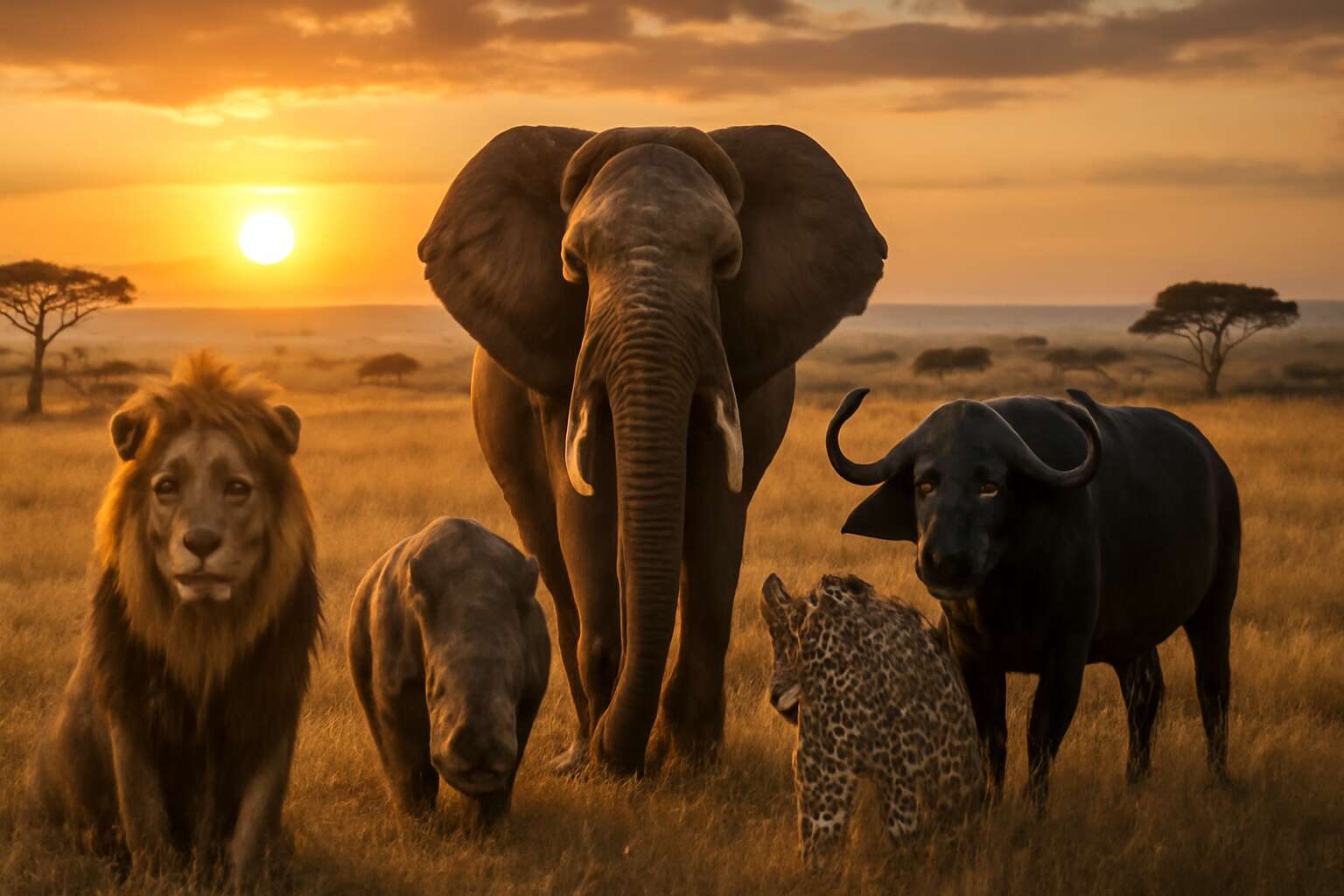
Overview of the Big Five in Africa
Introduction to the Big Five – Understanding the origin and significance of the Big Five in safari tourism
Few wildlife experiences rival the thrill of spotting the legendary Big Five from Africa—think of it as the VIPs of safari tourism. Originating back in the early 20th century, the term “Big Five” was coined by hunters, but today it’s a badge of honor for safaris worldwide, symbolizing the iconic animals that are both majestic and challenging to track. These magnificent creatures—lion, leopard, rhinoceros, elephant, and buffalo—are revered not only for their size and strength but also for their cultural significance across African landscapes.
Understanding the origin and significance of the Big Five in safari tourism reveals why they occupy such a revered spot in conservation and adventure circles. They are often considered the “must-see” for any wildlife enthusiast, and spotting them from Africa can be a once-in-a-lifetime moment. Here’s a quick peek into what makes these animals the stars of the safari show:
- Lion: The king of the savannah, symbolizing power and regal authority.
- Leopard: An elusive feline that embodies stealth and agility.
- Rhinoceros: Endangered giants whose horn-shaped silhouette is unforgettable.
- Elephant: The gentle giant revered for intelligence and social complexity.
- Buffalo: The stubborn protector of the herd, symbolizing resilience and strength.
Exploring the big five from Africa not only feeds one’s sense of adventure but also underscores the importance of conservation efforts that keep these awe-inspiring creatures alive and thriving on the continent.
Historical Background – The history behind the term and its evolution over time
The term “Big Five from Africa” once echoed through the annals of 20th-century hunters’ jargon, conjuring images of formidable beasts that tested human skill and nerve. Originally, it referred to the five most difficult animals to hunt on foot—lion, leopard, rhinoceros, elephant, and buffalo—each a testament to both nature’s grandeur and its danger. It was a badge of honor, a symbol of prowess for early adventurers venturing into uncharted wildernesses, their footsteps treading softly over plains and forests.
Yet, over time, this phrase transmogrified from a hunter’s daring challenge to a symbol of conservation and awe. Today, the “big five from Africa” embody the wildlife treasures that form the core of safari tourism’s lore. Their allure is not merely rooted in size or strength but in the stories etched into their survival—stories of resilience amidst threats like poaching and habitat loss. The evolution of this terminology reflects our changing relationship with these majestic animals: from targets of conquest to icons of preservation, reminding us all of the importance of safeguarding Africa’s most revered wildlife heritage.
Why the Big Five Matter – Ecological, cultural, and economic importance of the Big Five
The big five from Africa evoke a profound sense of reverence, not just because of their formidable presence but because of their integral role in the continent’s ecological tapestry. These majestic creatures—lion, leopard, rhinoceros, elephant, and buffalo—are keystones in maintaining the delicate balance of savannah and forest ecosystems. Their survival impacts countless other species, shaping the biodiversity that makes Africa uniquely resilient and diverse.
Beyond their ecological significance, the big five hold immense cultural and economic weight. For many indigenous communities, they are woven into their stories, traditions, and spiritual beliefs—embodying strength, endurance, and the raw beauty of life itself. From a modern perspective, their allure fuels Africa’s thriving safari tourism industry, inspiring awe and fostering conservation efforts. The big five from Africa symbolize more than raw power; they stand as guardians of the continent’s most enduring natural heritage.
- Ecological Stability
- Cultural Heritage
- Economic Vitality Through Tourism
The Iconic Animals of Africa’s Big Five
Lion – Habitat, behavior, and conservation status
The lion, often hailed as the king of the big five from Africa, commands both the savannah and our imaginations. These majestic predators are primarily found in sub-Saharan regions, thriving in expansive grasslands and woodland areas. Their habitats are as diverse as the lion’s personality—ranging from the open plains of the Serengeti to the lush bushveld of South Africa.
Behavior-wise, lions are social creatures, living in prides that can include up to 30 individuals. This social structure allows them to coordinate ambushes and defend their territory fiercely. Despite their regal reputation, lions face an uncertain future—classified as vulnerable on the conservation status spectrum due to habitat loss and human-wildlife conflict. Preservation efforts are crucial, as these charismatic animals are not just icons of Africa but vital for maintaining ecosystem balance.
Interestingly, the big five from Africa aren’t just about size; they symbolize the wild charm that makes Africa’s wildlife safaris truly unforgettable! Whether stalking prey or lounging under acacia trees, lions continue to embody the majestic wild spirit of Africa’s wilderness. And in the grand scheme, protecting these iconic animals ensures that future generations can marvel at their splendor firsthand.
Elephant – Different species, migration patterns, and threats
Among the grand ensemble of Africa’s wildlife, the elephant stands tall as a true icon of the big five from Africa. These gentle giants are nothing short of marvels, showcasing remarkable diversity with the African savanna elephants and forest elephants. While the savanna type roams the open plains, forest elephants prefer dense woodlands, each adapting uniquely to their environment. Migration patterns also set them apart: African elephants undertake some of the most extraordinary migrations, covering hundreds of kilometers in search of water and food—an awe-inspiring spectacle that underscores their resilience and importance to the ecosystem.
Sadly, these magnificent creatures face persistent threats on multiple fronts. Poaching for ivory, coupled with habitat encroachment, has decimated their populations, pushing them closer to the brink of endangerment. The big five from Africa, including the elephant, are vital keystone species—transforming landscapes, dispersing seeds, and maintaining ecological harmony. Protecting them isn’t just about preserving a symbol of Africa’s wilderness; it’s about safeguarding the intricate web of life that sustains countless other species. With their towering presence and gentle demeanor, elephants continue to symbolize Africa’s wild heart—an enduring reminder of nature’spower and fragility.
Buffalo – Role in ecosystem, identification tips, and conservation efforts
The buffalo, often overlooked in the shadow of other iconic members of Africa’s big five, is actually a pivotal species in the savanna ecosystem. These formidable creatures play a critical role in maintaining ecological balance, shaping the landscape and influencing plant diversity through their grazing habits. Recognizable by their large, curved horns and robust build, buffalo are easy to identify—especially when observing their herd behavior, which exudes strength and resilience.
Conservation efforts for the big five from Africa, including buffalo, are gaining momentum. Protected areas like Kruger National Park serve as vital sanctuaries, ensuring these animals continue to thrive amidst increasing threats. Wildlife researchers emphasize that safeguarding buffalo populations isn’t just about the species themselves; it’s about preserving the health of entire ecosystems. Interestingly, buffalo herds are often seen engaging in behaviors that reflect their social complexity, demonstrating their importance in biodiversity and the larger conservation narrative.
Leopard – Camouflage tactics, territory, and sightings
The leopard, an emblem of agility and stealth, is undoubtedly one of the most captivating members of the big five from Africa. Its mastery of camouflage is nothing short of extraordinary. With a coat that effortlessly blends into the dappled shadows of the savanna, the leopard can lie unnoticed for hours, patiently waiting for the perfect moment to strike. This incredible adaptation allows it to hunt efficiently while remaining largely invisible to both prey and observer.
Leopards are territorial animals, often marking their ranges with scent markings that can span several square kilometers. Their choice of territory is critical, and they tend to establish areas with ample cover and a steady supply of prey. Sightings of these elusive big cats are a thrill for safari seekers, often happening at dawn or dusk when their activities peak. Despite their solitary nature, leopards occasionally cross paths with other big five from Africa, adding layers of suspense and wonder to any wildlife experience.
- Camouflage tactics
- Territorial behavior
- Sighting opportunities
With their stealth, adaptability, and commanding presence, leopards remain among the most sought-after and admired members of Africa’s iconic big five. Observing one in the wild is a reminder of nature’s intricate balance, where every stripe and shadow plays a vital role in this extraordinary ecosystem.
Rhinoceros – Black vs. white, poaching issues, and conservation programs
The rhinoceros, an unmistakable icon among the big five from Africa, commands both admiration and concern. Two species stand out distinctly: the black rhinoceros and the white rhinoceros. While their names suggest a color difference, it’s their size, character, and behavior that truly set them apart. The black rhino, more reserved and often solitary, sports a hooked lip perfect for browsing shrubs and bushes. Conversely, the white rhino, larger and more gregarious, boasts a broad mouth tailored for grazing vast grasslands. Both face a common threat—poaching—driven by the insatiable demand for rhino horns in illegal markets. As a result, their numbers have dwindled alarmingly over recent decades, prompting urgent conservation programs to stem the tide of slaughter.
Such initiatives include anti-poaching patrols and community-led wildlife projects, aiming not only to protect these majestic creatures but also to ensure their future remains part of Africa’s vibrant wilderness. The fate of the big five from Africa, including the rhinoceros, hinges on these dedicated efforts—reminding us that safeguarding legendary animals requires collective resolve and relentless perseverance.
Best African Destinations To Experience the Big Five
Kenya – Maasai Mara National Reserve and its Big Five sightings
Kenya’s Maasai Mara National Reserve stands out as a premier destination for experiencing the big five from Africa. Witnessing these iconic animals in their natural habitat is nothing short of extraordinary. The reserve’s vast plains provide ample opportunities for unforgettable sightings of lions, elephants, buffalo, leopards, and rhinoceros. These creatures are the heart of the African wilderness and a key reason why the Maasai Mara draws wildlife enthusiasts from around the globe.
In addition to the big five, visitors often spot cheetahs, hyenas, and various nocturnal species, making every game drive a new adventure. The best time for big five sightings in Kenya is during the dry season, when animals tend to gather around water sources. If you’re keen to see the big five from Africa in their glory, the Maasai Mara offers an authentic safari experience that highlights the ecological richness of the continent.
Tanzania – Serengeti National Park and Ngorongoro Crater
Within the sweeping plains of Tanzania’s Serengeti National Park and the ethereal crater of Ngorongoro, the allure of the big five from Africa manifests as an untouched symphony of survival and grandeur. These iconic creatures—lion, elephant, buffalo, leopard, and rhinoceros—embody the primal heartbeat of the continent’s wilderness, each one a testament to resilience amid relentless change. The Serengeti’s vast, endless horizon becomes a canvas where predators stalk with calculated grace, and herds of elephants migrate in majestic procession, weaving through landscapes sculpted by time and nature.
Ngorongoro Crater, often called “Africa’s Garden of Eden,” offers an unparalleled opportunity for encounters—close, vivid, and profound. Here, the black rhinoceros, elusive yet powerful, roams alongside herds of buffalo and the silent, watchful eyes of leopards hiding within acacia branches. For those seeking a journey into the raw essence of Africa’s wilderness, these destinations reveal a submerged world where each encounter with the big five from Africa etches itself into the memory forever.
South Africa – Kruger National Park and private game reserves
South Africa’s Kruger National Park stands as an emblem of untamed wilderness, where the raw beauty of the big five from Africa unfolds in spectacular fashion. This immense reserve offers an immersive experience, allowing visitors to witness the profound drama of predator and prey interactions in their natural habitat. The sense of awe that washes over you when a lion’s majestic roar reverberates through the bush is unparalleled. It is here that the big five from Africa come alive, representing both primal power and fragile conservation efforts.
Beyond Kruger, private game reserves such as Sabi Sand and Timbavati elevate the safari experience into something truly exclusive. These protected enclaves, with their intimate access and fewer visitors, provide infrequent but rewarding sightings of the elusive leopard or the mighty buffalo. The thrill of encountering these larger-than-life creatures transcends mere photography—it touches something primal in the human spirit. It reminds us that the big five from Africa are not just icons of the continent’s wilderness but vital threads in the complex ecological tapestry of Africa’s protected environments.
Botswana – Okavango Delta and Chobe National Park
Embarking on a safari in Botswana promises an unforgettable journey into the heart of Africa’s wilderness, with the chance to encounter the legendary big five from Africa in their natural habitat. The Okavango Delta, a UNESCO World Heritage site, offers a captivating mosaic of islands and waterways where majestic elephants wade through lush channels and lions patrol game-rich territories. Equally compelling is Chobe National Park, renowned for its colossal elephant herds and prolific predator sightings. These destinations provide a captivating glimpse into the raw beauty and ecological complexity of Africa’s wilderness.
For travelers seeking an extraordinary wildlife encounter, Botswana’s prime game viewing is unparalleled. An engaging way to enhance your experience is to explore these exceptional locations:
- Witnessing massive elephant herds at Chobe—sometimes numbering in the thousands—an awe-inspiring spectacle of nature’s grandeur.
- Tracking stealthy leopards in the shadows of Okavango’s dense bush, where their elusive presence tests even seasoned safari veterans.
- Observing territorial lions lolling in the shade or vocalizing their dominance—a primal reminder of the big five from Africa’s enduring power.
Each of these destinations invites adventurers to connect intimately with the natural world, revealing the delicate balance that sustains Africa’s iconic species and highlighting the importance of conservation efforts. Botswana’s landscape isn’t just a backdrop—it’s a living, breathing testament to the resilience of the big five from Africa, with every safari promising stories of wild encounters and profound discovery. There’s truly no better place to immerse yourself in the spirit of adventure and witness these magnificent creatures firsthand.
Namibia – Etosha National Park and unique safari experiences
Namibia’s crown jewel, Etosha National Park, is a premier destination to experience the big five from Africa in a setting both stark and stunning. The park’s shimmering salt pan transforms into a mirage of mirth—an ideal backdrop for spotting rare and majestic creatures that define a genuine safari adventure. With waterholes serving as bustling social hubs, game viewers often marvel at the sight of elephants, lions, rhinos, buffalo, and leopards—all within a single day. The thrill lies not just in the diversity but in the way each animal reveals Namibia’s wild heartbeat.
For those eager to elevate their safari experience, the park offers unique opportunities such as night drives and guided walks that unearth unseen layers of Africa’s wilderness. A curated game drive through the rugged terrain might be accompanied by expert narrations, unraveling the intricacies of the big five from Africa and their ecological significance. As you traverse this rugged landscape, it’s impossible not to feel a profound reverence for the resilience of these iconic species and the conservation efforts securing their future.
Conservation Challenges and Efforts
Poaching and Illegal Wildlife Trade – Impacts on the Big Five populations
Poaching and illegal wildlife trade continue to cast long shadows over the majestic big five from Africa. These relentless threats decimate populations and threaten the very existence of iconic species like the elephant and rhinoceros. It is heartbreaking to see such treasured facets of Africa’s natural heritage fall prey to greed and corruption, fueling a grim cycle of loss that endangers entire ecosystems.
Efforts to curb these destructive forces have gained momentum, with anti-poaching units, stricter enforcement, and international cooperation playing vital roles. Nevertheless, the battle is far from over. The survival of the big five from Africa depends on concerted global awareness and continued innovation in conservation strategies.
Massive illegal trade networks often target species for their tusks, horns, and hides, making them some of the most trafficked wildlife in the world. To combat this, conservation organizations employ advanced surveillance technologies, including drone patrols and DNA tracking, to monitor and protect these species. Their resilience and cultural significance make the fight to preserve the big five from Africa not just a matter of ecological importance, but a moral imperative for humanity as well.
Habitat Loss – Deforestation, human-wildlife conflict, and land use changes
Habitat loss remains one of the most insidious challenges confronting the big five from Africa. As human populations expand, forested areas shrink under the weight of deforestation, leaving iconic species like elephants, lions, and rhinos with diminishing refuge. The relentless march of land use changes—whether for agriculture, urban development, or infrastructure—erodes the delicate ecosystems that sustain these majestic creatures.
Adding to this plight is the surge in human-wildlife conflict. Encroaching on traditional habitats often leads to tensions, resulting in retaliatory killings and further endangering the big five from Africa. Conservation efforts now focus on creating wildlife corridors, separating human settlements from critical habitats, and fostering community-based programs that promote coexistence.
Understanding the scale of habitat fragmentation underscores the importance of sustained conservation initiatives. Many organizations employ innovative solutions such as
- DNA tracking of wildlife movement
- satellite monitoring of habitat changes
- public awareness campaigns to reduce land conversion
to fight these ongoing challenges. The survival of the big five from Africa hinges on preserving the intricate tapestry of their habitats—each species a vital thread woven into the continent’s natural narrative.
Conservation Initiatives – Protected areas, anti-poaching measures, and community involvement
Conservation of the magnificent big five from Africa presents a complex but vital challenge. Robust initiatives are essential to safeguard these iconic species—elephants, lions, rhinos, buffalo, and leopards—that define the soul of the continent’s wilderness. Protected areas such as national parks and game reserves serve as strongholds, offering a sanctuary from poaching and habitat destruction.
Anti-poaching measures have progressed remarkably, incorporating cutting-edge technology like drone surveillance, thermal imaging, and radio-collaring to track elusive wildlife. These efforts are complemented by community involvement programs, which foster a sense of ownership and responsibility among local populations. Engaging communities ensures that conservation becomes a shared mission rather than a distant ideal.
- Employment opportunities in eco-tourism and park management
- Educational campaigns to inspire local stewardship
- Partnerships with conservation organizations to combat illegal wildlife trade
Ultimately, protecting the big five from Africa requires a mosaic of strategies—blending innovation, community participation, and unwavering dedication—that weave a resilient fabric of survival for generations to come. Each step forward echoes loudly in the ongoing saga of Africa’s wilderness.
Role of Tourists – Responsible tourism practices and supporting conservation
Despite decades of conservation efforts, the big five from Africa continue to face formidable challenges, threatening their existence in the wild. Habitat loss driven by land conversion and urban expansion, coupled with resilient poaching syndicates, has put these iconic species under relentless pressure. The illegal wildlife trade remains a lucrative black market enterprise, draining the populations of elephants, rhinos, and other members of the big five from Africa.
Efforts to combat these threats are evolving with innovative strategies. Anti-poaching units now deploy advanced technology such as drones, thermal imaging cameras, and GPS radio-collars to monitor and protect these majestic creatures tirelessly. Local communities are increasingly becoming vital allies; their involvement fosters a sense of stewardship essential for sustainable conservation. Among the many initiatives, community-based conservation programs have shown remarkable success in connecting local livelihoods with the preservation of the big five from Africa.
Tourists play an essential role in this delicate ecological dance. Responsible tourism practices—such as adhering to park regulations, minimizing ecological footprints, and supporting ethical lodges—are more important than ever. Donors and visitors alike have the power to support conservation by selecting eco-friendly safari operators and contributing to organizations dedicated to safeguarding Africa’s wilderness. By actively supporting conservation initiatives, tourists transform from passive observers into vital custodians of Africa’s natural heritage.
In addition, the role of responsible tourism extends to education—raising awareness about the plight of the big five from Africa and inspiring a global community committed to their survival. After all, every safari offers more than just picture-perfect moments; it’s a potent reminder that the fight for these majestic animals is a shared responsibility. When tourists embrace these practices, they join a noble line of guardians standing sentinel at the crossroads of Africa’s wilderness and its future.


0 Comments