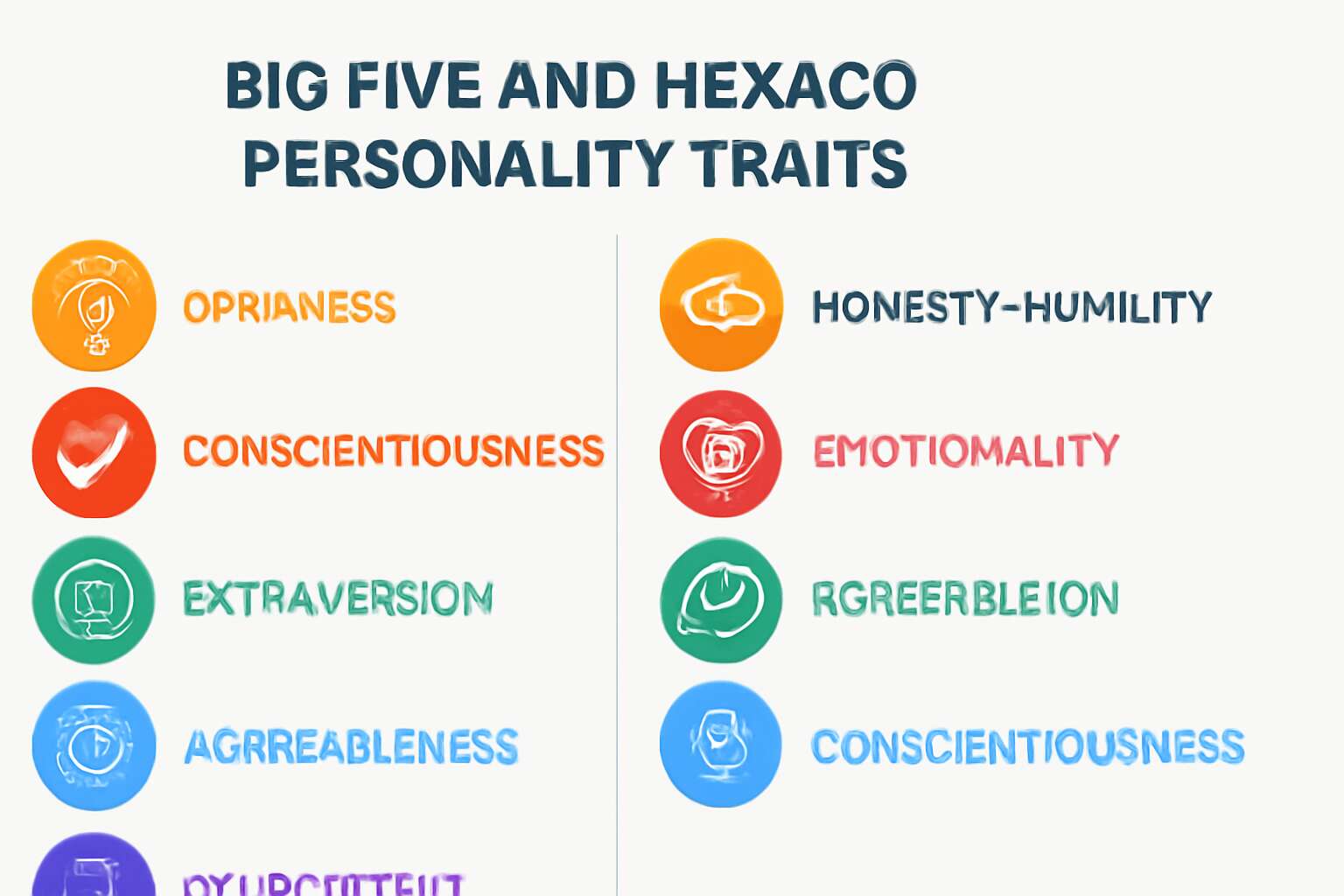
Understanding Personality Models: Big Five and HEXACO
Overview of Personality Psychology
When it comes to deciphering the mysterious blueprint of human personality, the Big Five and HEXACO models stand as the reigning champions — think of them as the ultimate personality GPS, guiding us through the labyrinth of human quirks and traits. Interestingly, over 50% of personality psychologists worldwide prefer the Big Five for its straightforward yet comprehensive approach, while HEXACO adds a dash of intrigue with its six-factor framework. Both models aim to quantify what makes us uniquely us, from our openness to experience to our level of conscientiousness — and yes, even our propensity for honesty and humility.
What sets HEXACO apart is its inclusion of the Honesty-Humility factor, providing a fresh perspective often missing in traditional models. Meanwhile, the Big Five breaks personality down into five broad domains: openness, conscientiousness, extraversion, agreeableness, and neuroticism—traits that are surprisingly good at predicting real-world behavior. For those keen on understanding the deeper layers of personality, exploring these models reveals not just how we see ourselves, but how we resonate with others in fields like recruitment, psychology, or even everyday social interactions. After all, whether you’re a spirited extrovert or a cautious introvert, these frameworks help decode the fascinating mosaic that is human personality.”
Introduction to the Big Five Model
Imagine charting a vast, uncharted cosmos, where each star represents a facet of human personality shimmering with unique brilliance. The Big Five model, often hailed as the celestial map of personality, distills our complex human nature into five mighty domains: openness, conscientiousness, extraversion, agreeableness, and neuroticism. These traits serve as guiding constellations, illuminating the ways we think, feel, and behave in everyday life. In South Africa’s vibrant tapestry of culture and character, understanding these traits offers profound insights into social and professional interactions alike.
What makes the Big Five stand out is its simplicity paired with depth. It provides a reliable framework to predict behaviors across diverse contexts, from workplace dynamics to personal relationships. Interestingly, over 50% of personality psychologists worldwide favor the Big Five for its clarity and comprehensive scope. For those seeking to unravel the deeper layers of human personality, the Big Five acts like an ancient compass, revealing how our innermost dispositions shape our outward expressions. Meanwhile, the HEXACO model introduces an intriguing twist—adding honesty and humility as a sixth factor—offering a broader spectrum of human traits that resonate with real-world complexity.
Introduction to the HEXACO Model
The realm of personality psychology is as vast and intricate as the South African landscape itself, revealing layers of human complexity often overlooked. The HEXACO model expands upon the familiar territory of the Big Five, offering a richer, more nuanced understanding of our inner worlds. At its core, HEXACO introduces honesty and humility as a pivotal sixth dimension—traits that resonate deeply within South Africa’s diverse cultural fabric, where integrity and humility often define social cohesion.
Unlike the Big Five, which focus on broad domains like openness and extraversion, HEXACO emphasizes the moral and ethical dimensions of personality. These traits influence how individuals navigate social norms and confront moral dilemmas. For example, honesty-humility captures qualities such as sincerity, fairness, and modesty, which are essential for fostering trust and community. This additional layer allows researchers and practitioners alike to better understand behavioral motivations in various contexts, from workplace ethics to personal relationships.
Understanding these models becomes even more compelling when viewed through the lens of South Africa’s diverse societal landscape. The Big Five and HEXACO provide vital insights into how cultural values shape personality traits, influencing everything from leadership styles to interpersonal harmony. Recognizing the differences and overlaps between these frameworks enriches our grasp of what truly drives human behavior in a complex, dynamic society.
The Big Five Personality Traits
Openness to Experience
Openness to Experience is the shimmering window into the soul’s curiosity, a trait that transforms the mundane into the extraordinary. Within the big five and hexaco models, this trait captures the essence of imagination, creativity, and a zest for discovery. It’s that spark that fuels artists, innovators, and explorers—those who see the world through a kaleidoscope of possibilities.
Individuals high in openness tend to embrace novelty with exuberance, seeking out new ideas, cultures, and perspectives. They thrive on intellectual stimulation and flourish in environments that challenge conventional boundaries. Conversely, those with lower openness might prefer familiarity, stability, and routines that provide comfort amid life’s chaos.
Interestingly, research suggests that openness is linked to a broader appreciation for diversity and adaptability—traits increasingly valuable in South Africa’s vibrant, multicultural landscape. Whether in personal relationships or professional pursuits, understanding the nuances of this trait within the big five and hexaco models offers a rich tapestry of human potential.
Conscientiousness
Conscientiousness is the silent architect of success within the big five and hexaco models. It’s the trait that transforms dreams into tangible achievements—an unwavering compass guiding individuals through the chaos of everyday life. High conscientiousness manifests as discipline, organization, and a relentless pursuit of goals, making it a cornerstone of reliability and integrity.
In South Africa’s dynamic landscape, where adaptability and perseverance are vital, conscientious individuals often stand out. They approach tasks with methodical precision and a sense of purpose that can turn ambitious visions into reality. This trait isn’t just about hard work; it’s about strategic effort and dependable consistency.
- Meticulous planning
- Persistent effort
- Strong sense of responsibility
Understanding conscientiousness within the big five and hexaco models reveals a profound link between personality and achievement—an essential insight for navigating personal growth and professional success in a vibrant, evolving society. It’s a trait that embodies the very essence of human potential—focused, disciplined, and resilient against all odds.
Extraversion
Extraversion is the vibrant pulse that breathes life into the big five and hexaco personality models. It’s the trait that fuels social interaction, radiates enthusiasm, and fosters a magnetic presence in any setting. In South Africa’s bustling social landscape, extraverted individuals often thrive, effortlessly building connections and inspiring those around them.
People high in extraversion tend to seek out lively environments, where their energy and optimism can flourish. They’re often seen as natural leaders, capable of rallying teams and igniting enthusiasm with ease. This trait isn’t just about being outgoing; it embodies a zest for life and a desire to engage fully with the world.
Understanding extraversion within the big five and hexaco frameworks reveals how social vitality influences personal and professional success. Whether navigating vibrant communities or dynamic workplaces, extraverted personalities excel at turning opportunities into meaningful experiences, embodying the essence of thriving in a lively society.
Agreeableness
Agreeableness, in the dance of the big five and hexaco personality models, is the gentle melody that weaves harmony into the fabric of human interaction. It’s the tender trait that guides us to trust, cooperate, and show compassion—qualities that resonate deeply within South Africa’s diverse social tapestry. This trait isn’t merely about being nice; it’s about embodying a warm, empathetic spirit that fosters genuine connections.
Those high in agreeableness often serve as the glue that holds communities and workplaces together. Their innate kindness and willingness to see the best in others make them invaluable in collaborative environments. In the vibrant social landscape of South Africa, this trait translates into a natural ability to build bridges across differences, turning conflict into understanding.
Within the big five and hexaco frameworks, agreeableness influences how individuals navigate social terrains, shaping their reputation and relationships. Whether leading a team or nurturing friendships, people with a high level of agreeableness radiate a magnetic trustworthiness that inspires loyalty and admiration. It’s a trait that turns everyday interactions into moments of genuine connection and shared humanity.
Neuroticism
Neuroticism, often misunderstood as mere emotional fragility, is actually a complex dance step within the big five and hexaco personality models. It captures the tendency to experience negative emotions like anxiety, moodiness, and irritability—traits that can turn life’s calm waters into turbulent seas. In South Africa’s vibrant social landscape, high neuroticism might manifest as a heightened sensitivity to conflict or a tendency to ruminate in moments of stress.
Contrary to popular belief, neuroticism isn’t solely a flaw; it’s a double-edged sword that can foster resilience and vigilance. Those with elevated levels tend to be more attuned to potential threats, often leading to overthinking or heightened emotional responses. Recognizing this trait within the big five and hexaco frameworks helps in understanding how individuals navigate social and professional terrains—sometimes with a touch of melodrama, but always with a dash of human authenticity.
- People high in neuroticism may find themselves caught in a cycle of worry, which can influence their decision-making and relationships.
- Conversely, those lower in this trait often display stability and calmness, qualities highly valued in South Africa’s diverse cultural fabric.
In essence, neuroticism adds a layer of richness to the human personality palette. It’s a reminder that even our vulnerabilities—when understood—can become sources of strength within the ongoing dance of the big five and hexaco models.
The HEXACO Personality Model
Honesty-Humility
The HEXACO Personality Model introduces a fascinating twist to the traditional understanding of human character, with the Honesty-Humility trait at its core. Unlike the Big Five, which often emphasizes traits like extraversion and neuroticism, HEXACO’s Honesty-Humility probes the depths of moral character, capturing qualities such as sincerity, fairness, and modesty. It’s a trait that reveals a person’s true moral compass, often whispering truths about integrity that the Big Five might overlook.
In essence, Honesty-Humility distinguishes those who are genuinely humble from the boastful and manipulative. This trait serves as a mirror reflecting one’s authenticity and ethical stance—crucial factors in both personal and professional realms. For instance, individuals high in Honesty-Humility tend to avoid deceit and manipulation, fostering trust and respect in social interactions. Interestingly, this trait can be a decisive factor in leadership and teamwork, making it a vital component of the broader HEXACO model and an insightful complement to the big five and hexaco personality frameworks.
Emotionality
The HEXACO Personality Model unveils a captivating dimension called Emotionality, an intricate tapestry woven from the threads of human vulnerability and resilience. Unlike the Big Five, which often emphasizes extraversion or openness, HEXACO’s Emotionality delves into the depths of emotional sensitivity, empathy, and fearfulness. It reveals how individuals respond to stress, personal bonds, and emotional upheaval, providing a nuanced understanding of human behavior.
Those high in Emotionality tend to experience feelings intensely, displaying compassion and warmth, yet sometimes battling with anxiety or mood swings. Conversely, individuals on the lower end of this trait often exhibit emotional stability, resilience, and a pragmatic approach to life’s challenges. This spectrum offers vital insights into personality psychology, especially when examining leadership qualities and interpersonal dynamics within the big five and hexaco frameworks. Recognizing these subtle emotional currents can illuminate the hidden layers of personality that influence personal and professional landscapes alike.
Extraversion
Extraversion in the HEXACO model captures more than just outgoing behavior; it reflects a person’s energy, social confidence, and eagerness to engage. Unlike the Big Five, which emphasizes assertiveness and activity, HEXACO’s version emphasizes genuine warmth and the desire for social connection. This trait influences how individuals approach new environments, handle social situations, and project their personality in the workplace.
People scoring high in HEXACO’s Extraversion tend to be lively, enthusiastic, and assertive. They often thrive in team settings and excel at networking. Conversely, those with lower scores may prefer solitude and exhibit a reserved nature. This variation impacts leadership styles and interpersonal dynamics significantly.
- High Extraversion fosters effective communication, making it a key trait for leadership roles.
- Lower levels can indicate a preference for introspection and independence, which can be equally valuable in specialized fields.
Understanding the nuances of the big five and hexaco models reveals how Extraversion shapes personal and professional success. It’s a vital component in understanding human behavior, especially in diverse cultural contexts like South Africa, where social interaction plays a pivotal role. Recognizing these subtleties helps organizations and individuals harness the full potential of personality traits for growth and harmony.
Agreeableness
Conscientiousness
In the grand tapestry of personality psychology, Conscientiousness often emerges as the trait that separates the diligent from the dilettantes. Within the HEXACO personality model, this dimension takes on a nuanced form, emphasizing qualities like organization, dependability, and a penchant for planning—traits that serve as the backbone of professional and social success. Interestingly, research suggests that individuals scoring high in Conscientiousness are more likely to excel in careers demanding meticulous attention to detail and unwavering discipline.
Unlike the big five and hexaco, which sometimes seem to dance around the edges of morality, the HEXACO model integrates Conscientiousness with a keen sense of social responsibility. This trait influences how we approach commitments and manage our impulses—crucial elements that underpin societal cohesion. For those curious about understanding human behavior, recognizing these traits can shed light on everything from workplace dynamics to personal relationships. After all, in a world increasingly driven by collaboration and accountability, Conscientiousness isn’t just a personality trait—it’s a currency.
Openness to Experience
Openness to Experience, a captivating facet of the big five and hexaco, embodies the restless spirit of curiosity and innovation that drives human progress. It’s the trait that fuels the artist’s brushstroke, the scientist’s hypothesis, and the entrepreneur’s daring leap into the unknown. Individuals high in this dimension often exhibit a vibrant love for new ideas, diverse cultures, and novel experiences, enriching their lives with a kaleidoscope of perspectives.
Within the hexaco model, Openness to Experience extends beyond mere curiosity; it encompasses a refined appreciation for aesthetic beauty, abstract thinking, and intellectual exploration. This trait shapes how people approach change and challenge—embracing them as opportunities for growth rather than obstacles. Interestingly, those with elevated levels of openness tend to excel in fields that demand creativity and adaptability, making this trait a vital component in understanding human potential in today’s dynamic world.
In the grand mosaic of personality, Openness to Experience acts as a bridge between tradition and innovation, inspiring individuals to reimagine the boundaries of what is possible. Whether in South Africa’s vibrant cultural tapestry or the global stage, this trait remains a testament to the unyielding human quest for meaning and discovery.
Comparative Analysis of Big Five and HEXACO
Core Differences and Similarities
Comparing the big five and hexaco models reveals intriguing core differences and similarities. The big five emphasizes five broad traits—openness, conscientiousness, extraversion, agreeableness, and neuroticism—that have dominated personality psychology for decades. However, the hexaco model introduces a sixth dimension: honesty-humility. This addition accounts for traits like sincerity, fairness, and modesty, which the big five tends to overlook.
Despite these distinctions, both models share a common goal: understanding human behavior through trait analysis. They agree on the importance of extraversion and agreeableness, but diverge on emotional aspects and moral virtues. Specifically, the big five’s neuroticism overlaps somewhat with the emotionality facet in hexaco, yet the latter provides a broader perspective by including traits connected to integrity and humility.
- Both frameworks are rooted in factor analysis, making them scientifically robust.
- The big five remains more widely used in Western psychology, while hexaco gains traction globally, especially in South Africa.
- Each model offers unique insights—big five excels in predicting workplace behavior, while hexaco provides a nuanced view of moral character and social harmony.
Unique Traits and Dimensions
When comparing the big five and hexaco, the distinctions reveal fascinating layers of human complexity. The big five’s traits—openness, conscientiousness, extraversion, agreeableness, and neuroticism—form a sturdy foundation in personality psychology. Yet, the hexaco model introduces a sixth dimension: honesty-humility, which captures a spectrum of moral virtues often missed by the big five. This added trait sheds light on qualities like sincerity, fairness, and modesty, providing a richer understanding of social harmony and integrity.
Both frameworks are rooted in rigorous factor analysis, ensuring their scientific credibility. However, their unique traits carve distinct paths: the big five tends to excel in predicting workplace behavior, while hexaco offers a nuanced lens on moral character and social virtue. The inclusion of honesty-humility in hexaco makes it especially valuable for assessing traits linked to trustworthiness and humility—elements vital in diverse cultural contexts like South Africa.
Overlap in Traits
When delving into the comparative analysis of the big five and hexaco, the overlapping traits reveal a tapestry of human complexity that is both fascinating and profound. Both models, rooted in rigorous scientific inquiry, highlight core dimensions such as openness to experience, conscientiousness, extraversion, agreeableness, and neuroticism—each offering a window into fundamental facets of personality. Yet, the hexaco model’s inclusion of honesty-humility introduces a nuanced layer, emphasizing moral virtues like sincerity and fairness that the big five may overlook.
Interestingly, research indicates that while the big five excels in predicting workplace behavior and occupational success, hexaco’s broader scope lends itself more effectively to assessing social virtues and trustworthiness—elements especially pertinent in culturally diverse contexts like South Africa. The overlap in traits suggests a shared understanding of personality’s architecture, yet the divergence in additional dimensions underscores the distinct paths each framework offers in understanding human behavior.
Applications of Big Five and HEXACO in Real Life
Personality Assessment and Testing
In the vibrant tapestry of South African life, understanding personality traits through tools like the big five and hexaco has revolutionized how we approach personal development, recruitment, and mental health. These models offer a window into human behavior, helping us appreciate the nuanced layers that define each individual. For instance, in rural communities, where social cohesion and resilience are vital, personality assessments grounded in the big five and hexaco can reveal insights that foster empathy and better communication.
Employers and psychologists alike utilize these frameworks to tailor interventions, enhance team dynamics, and support mental well-being. In fact, the application of big five and hexaco in real-life personality testing enables more accurate predictions of behavior, making them invaluable in diverse settings. From selecting the right candidate for a leadership role to guiding personal growth journeys, these models serve as a compass in navigating the complex landscape of human personality.
Workplace and Career Development
In today’s competitive South African workplace, understanding personality traits is more than a luxury — it’s a necessity. The big five and hexaco models provide deep insights into how individuals behave, communicate, and lead. Employers increasingly rely on these frameworks to make smarter hiring decisions and develop tailored training programs that align with each person’s unique traits.
For example, a candidate’s level of conscientiousness can predict their work ethic and reliability, while traits like honesty-humility from the hexaco model reveal integrity and ethical standards. These insights help managers build cohesive teams, foster leadership, and reduce turnover. In the realm of career development, understanding the big five and hexaco can guide professionals toward roles that suit their natural predispositions, boosting job satisfaction and performance.
Psychological Research
In the realm of psychological research, the applications of the big five and hexaco models extend far beyond academic boundaries. These frameworks serve as invaluable tools for understanding human behavior in diverse contexts, from clinical settings to social dynamics. For instance, researchers utilize the big five and hexaco to explore how personality traits influence decision-making, resilience, and interpersonal relationships. Such insights deepen our grasp of individual differences and their societal implications.
Moreover, in South Africa’s vibrant social fabric, these models help unravel complex cultural interactions. Studies have shown that personality assessments rooted in the big five and hexaco can predict behaviors like cooperation, leadership, and conflict resolution across different communities. This understanding fosters more inclusive and effective social policies, as well as targeted mental health interventions that respect cultural nuances.
- Designing tailored mental health programs that address specific personality traits highlighted by the big five and hexaco, promoting better recovery outcomes.
- Enhancing cross-cultural communication by recognizing trait variability across populations, leading to more harmonious workplace environments.
- Advancing social research that examines how traits like honesty-humility and emotional stability shape societal norms and values.
Indeed, the real-world application of the big five and hexaco in psychological research exemplifies how nuanced insights into human personality can transform societal understanding, personal growth, and professional development in South Africa and beyond. These models are not mere academic constructs—they are the lenses through which we can better comprehend the intricate tapestry of human nature.
Personal Growth and Self-Understanding
Understanding your personality traits can be a powerful catalyst for personal growth and self-awareness. The big five and hexaco models offer practical insights that help individuals navigate their lives with greater clarity. By identifying traits like openness, conscientiousness, or honesty-humility, people can better recognize their strengths and areas for development.
For example, someone seeking to improve their emotional resilience might focus on traits like emotional stability from the big five or emotionality in hexaco. These frameworks enable a nuanced self-assessment that goes beyond surface-level understanding. Many find that reflecting on their personality traits leads to more authentic decision-making and healthier relationships.
- Personalized goal setting based on individual trait profiles.
- Enhanced self-awareness that fosters emotional intelligence.
- Better understanding of how traits influence behavior and choices.
In South Africa, where diverse cultural backgrounds intersect, the big five and hexaco models serve as valuable tools for fostering empathy and self-understanding. Recognizing how different personality dimensions manifest across communities can promote more inclusive interactions and personal development. This approach helps unlock the potential within each individual, paving the way for meaningful societal progress.
Advantages and Limitations of Both Models
Strengths of the Big Five
Within the shadowy corridors of personality psychology, both the big five and hexaco models stand as formidable gateways to understanding the human soul. The big five’s strength lies in its elegant simplicity—five broad traits that carve a clear map of individual differences. Its robustness is evident in the vast body of psychological research, making it a trusted tool for workplace assessment and personal insight. Yet, this model’s limitation emerges in its sometimes narrow focus on traits like extraversion or neuroticism, leaving deeper moral and spiritual dimensions in the dark.
Conversely, the hexaco model introduces a novel dimension—Honesty-Humility—that unveils the hidden currents of morality and integrity. Its versatility enriches our grasp of personality, especially in cultures where ethical nuance is paramount. The hexaco’s strength is its holistic approach, capturing traits that the big five might overlook. Nevertheless, critics argue that it can be unwieldy, complicating quick assessments and making it less accessible for broad applications. Both models, in their own dark elegance, offer distinct lenses through which to pierce the veils of human complexity.
Strengths of the HEXACO
The hexaco model’s main advantage is its ability to capture moral and ethical dimensions that the big five and hexaco often overlook. The addition of the Honesty-Humility trait unveils a deeper layer of personality, revealing how integrity, sincerity, and fairness shape human behavior. This makes the hexaco model especially valuable in contexts where morality and ethical nuance are critical—such as leadership roles or cultural assessments within South Africa.
Furthermore, the hexaco’s holistic approach offers a broader understanding of human personality, incorporating traits that reflect social responsibility and genuine humility. These qualities are increasingly relevant in today’s world, where authenticity and moral integrity are prized. However, critics point out that the model can be unwieldy in fast-paced settings. For quick assessments or large-scale testing, the comprehensive nature of the hexaco can prove cumbersome, making the big five and hexaco less practical for some applications.
Nevertheless, both models serve as insightful tools. The strengths of the hexaco lie in its nuanced perspective on morality and character, providing a richer, more textured view of personality that complements the broad traits of the big five and hexaco. This duality ensures a more complete understanding of human complexity, especially in culturally diverse environments like South Africa, where ethical considerations often take center stage.
Potential Drawbacks
Both the big five and hexaco models of personality offer invaluable insights, yet each bears its own set of advantages and limitations. The big five’s simplicity and practicality make it a favorite in many settings—its broad traits are easy to grasp and apply across diverse populations. Meanwhile, the hexaco’s nuanced approach, especially with its Honesty-Humility trait, uncovers moral and ethical dimensions often overlooked by the big five, enriching our understanding of human character.
However, the comprehensive nature of the hexaco can sometimes be a double-edged sword. Its detailed framework may be unwieldy in fast-paced environments or large-scale assessments, where time and resources are limited. Conversely, the big five’s streamlined structure facilitates quick evaluations but might miss subtle moral nuances vital in contexts like leadership or cultural analysis within South Africa.
- While the big five excels in providing a broad overview, it may lack depth in moral and social responsibility traits.
- The hexaco’s detailed traits can lead to more precise personality profiling, yet demand more extensive testing and interpretation.
Ultimately, understanding these models’ potential drawbacks allows practitioners to choose the most suitable tool for their specific needs, ensuring a richer, more accurate portrait of personality—whether in the realm of workplace development, psychological research, or personal growth within South Africa’s vibrant cultural landscape.
Future of Personality Psychology: Integrating Models
Emerging Research and Trends
The future of personality psychology is shimmering with promise, as emerging research and innovative models propel us toward a more nuanced understanding of human nature. As scientists delve deeper into the intricacies of personality, the integration of the big five and hexaco models offers a compelling pathway for unraveling the complexities that define us. These frameworks, each with their unique lenses, are increasingly being viewed not as competing paradigms but as complementary tools capable of capturing the multifaceted essence of personality.
One exciting trend is the development of hybrid assessment methods that combine the strengths of the big five and hexaco. By doing so, researchers aim to create more holistic measures that reflect both the universal and culturally specific aspects of personality traits. Additionally, the integration of technological advancements, such as AI-powered personality testing, promises to democratize access and enhance accuracy. As our understanding deepens, these models will likely serve as foundational pillars in diverse fields—ranging from workplace psychology to personal development—illuminating the paths individuals can carve for themselves in an ever-changing world.
Combining Insights for Better Personal and Professional Outcomes
The future of personality psychology is brimming with potential, as researchers increasingly recognize the value of integrating the big five and hexaco models. This synthesis offers a more comprehensive lens through which to understand human nature, capturing both universal traits and culturally nuanced behaviors. Such convergence is transforming how we assess personality—moving beyond isolated frameworks to embrace hybrid models that reflect the full spectrum of human complexity.
By combining insights from the big five and hexaco, psychologists can develop more nuanced personality assessments that serve diverse fields—from workplace development to personal growth. These integrated approaches facilitate a deeper understanding of individual differences, enabling tailored interventions that enhance both personal and professional outcomes. As technology advances, particularly with AI-driven testing, these hybrid methods are poised to democratize access to sophisticated personality insights worldwide, including in South Africa.
- Enhanced accuracy in personality measurement
- Greater cultural relevance through inclusive trait dimensions
- More holistic approaches to personal and professional development
Ultimately, blending the strengths of the big five and hexaco models is opening new pathways for unlocking human potential, illuminating the intricate tapestry of traits that define us all. This integrated approach promises to be a cornerstone of future psychological research and application, shaping how we understand ourselves and others in an ever-evolving world.




0 Comments